
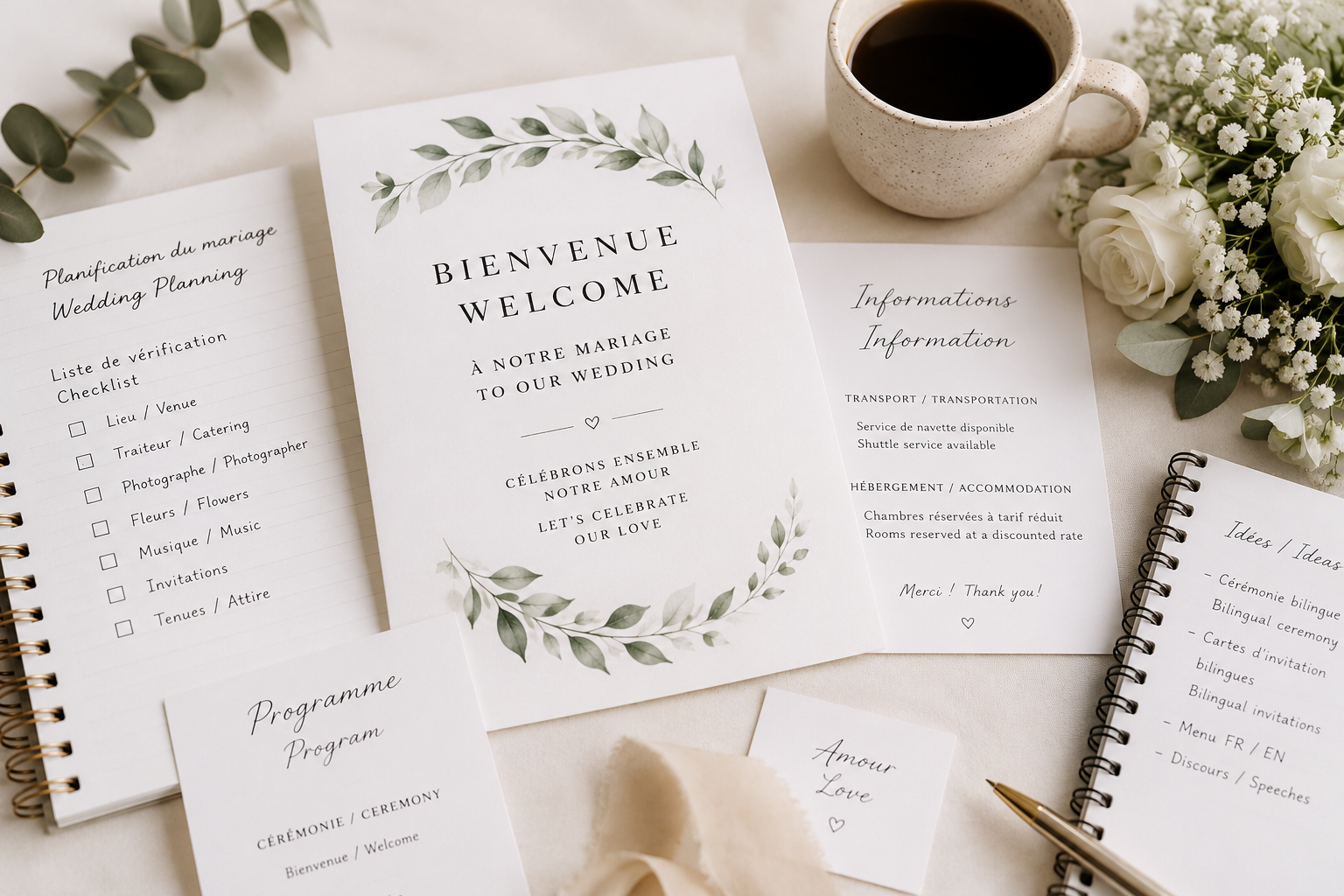
Canada has more bilingual couples and mixed-language families than almost anywhere else in the world, and yet most wedding planning resources treat English as the default - a bilingual section tacked on as an afterthought. This guide is for couples who genuinely need both languages to feel present, not just tolerated.
The Core Principle: Alternate, Don't Repeat
The biggest mistake bilingual weddings make is doing everything twice in full - a complete speech in English, then the same speech in French. Guests who speak one language sit through five minutes of content they don't understand, then wait again. It's exhausting for everyone.
The better approach: line by line or section by section, alternating languages throughout. Vows are a perfect example - say each line in French, then English, then move to the next line. Guests of both languages follow along in real time rather than waiting for their "turn."
What to Translate vs. What to Leave
Not everything needs to be bilingual. Prioritize:
- Ceremony program - print both languages, alternate by section
- Vows and key readings - these are the emotional core; both language groups deserve to understand them
- MC announcements - dinner seating, speeches, first dance cues
- Signage - table names, menu cards, the seating chart
You can usually leave in one language: personal speeches from family and friends, toasts from close friends, and music choices.
Invitations and Your Wedding Website
In Canada, if a significant portion of your guests are Francophone, let your invitation lead with French or present both languages side by side. For the wedding website, a toggle between EN/FR is far cleaner than stacking every paragraph twice - it avoids visual clutter and lets guests read in their preferred language without scrolling past content that isn't for them.
Finding a Bilingual Officiant
Find one early - this is harder than it sounds outside of Quebec and Ottawa. Search through provincial officiant registries, not just wedding directories. Ask for a sample ceremony they've conducted in both languages before you commit. A bilingual officiant who is merely conversational in their second language will show, and it will break the ceremony's emotional flow.
The One Thing to Avoid
Don't hire a live interpreter standing beside the officiant, translating in real time. It works in conference settings, not weddings - the delay creates an odd echo effect and pulls attention away from the couple. Pre-written bilingual scripts with a single officiant are always cleaner.